When the Developer Is the Problem: How Controversy Reshaped Heartbound's Steam Reviews
What happens to Steam reviews when the controversy is about the developer, not the game? A data study of 3,589 Heartbound reviews finds out.
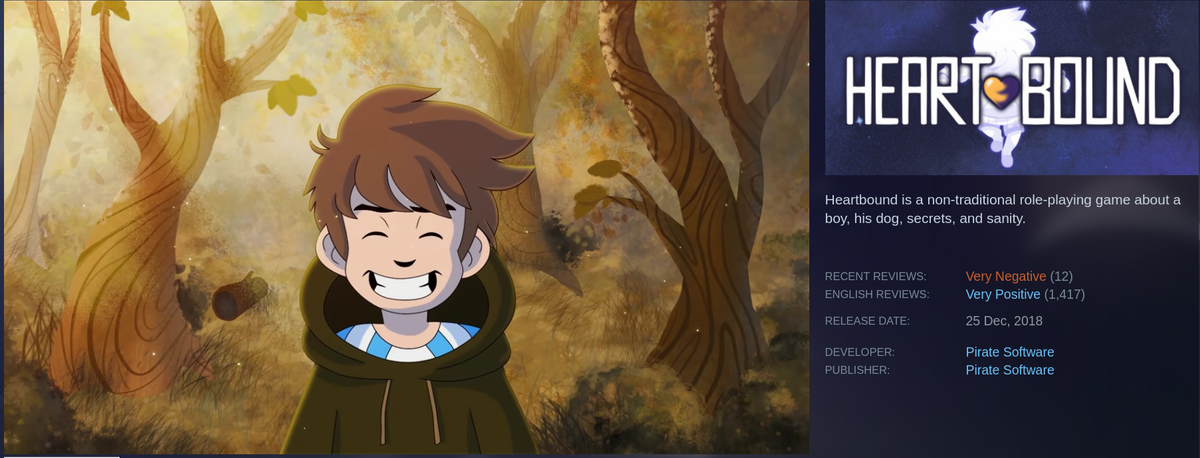
Heartbound is an indie RPG that has been in early access since 2018. It has pixel-art charm, a story about a boy and his dog, and a small but passionate community. Then, in 2024, everything flipped.
Following developer Jason Thor Hall's public opposition to the Stop Killing Games consumer rights initiative - and a series of compounding controversies through 2025 - the game's Steam page turned into a battleground. I wanted to know: what happens to player reviews when the game itself isn't the problem? When the controversy is about the person making it?
What Actually Happened
Jason Thor Hall - known online as "Thor" or "Pirate Software" - is both the developer of Heartbound and a prominent Twitch streamer with nearly two million followers by 2024. His streaming income directly funds the game's development, making his public persona and his role as developer unusually intertwined.
The controversy's trigger was Hall's public opposition to the Stop Killing Games initiative, a petition seeking EU legislation requiring publishers to keep purchased games playable after server shutdown. On 6 August 2024, he published a YouTube video calling the initiative "incredibly vague and damaging to the rest of our industry." The backlash was swift. Critics argued the position was self-serving: Heartbound was itself a long-running early access title that players had purchased years earlier on the implicit promise it would be finished. Opposing consumer protection while running an unfinished early access game was a contradiction the community did not let go.
The controversy compounded over time. A widely criticized incident in a World of Warcraft guild in January 2025 and a direct response video from Stop Killing Games founder Ross Scott in June 2025 each sent fresh waves of reviewers to Heartbound's Steam page. The data reflects all of it.
What the Numbers Show
I collected all 3,589 Steam reviews for Heartbound, stretching from 2018 to 2025, and compared two periods: before and after the controversy began in August 2024.
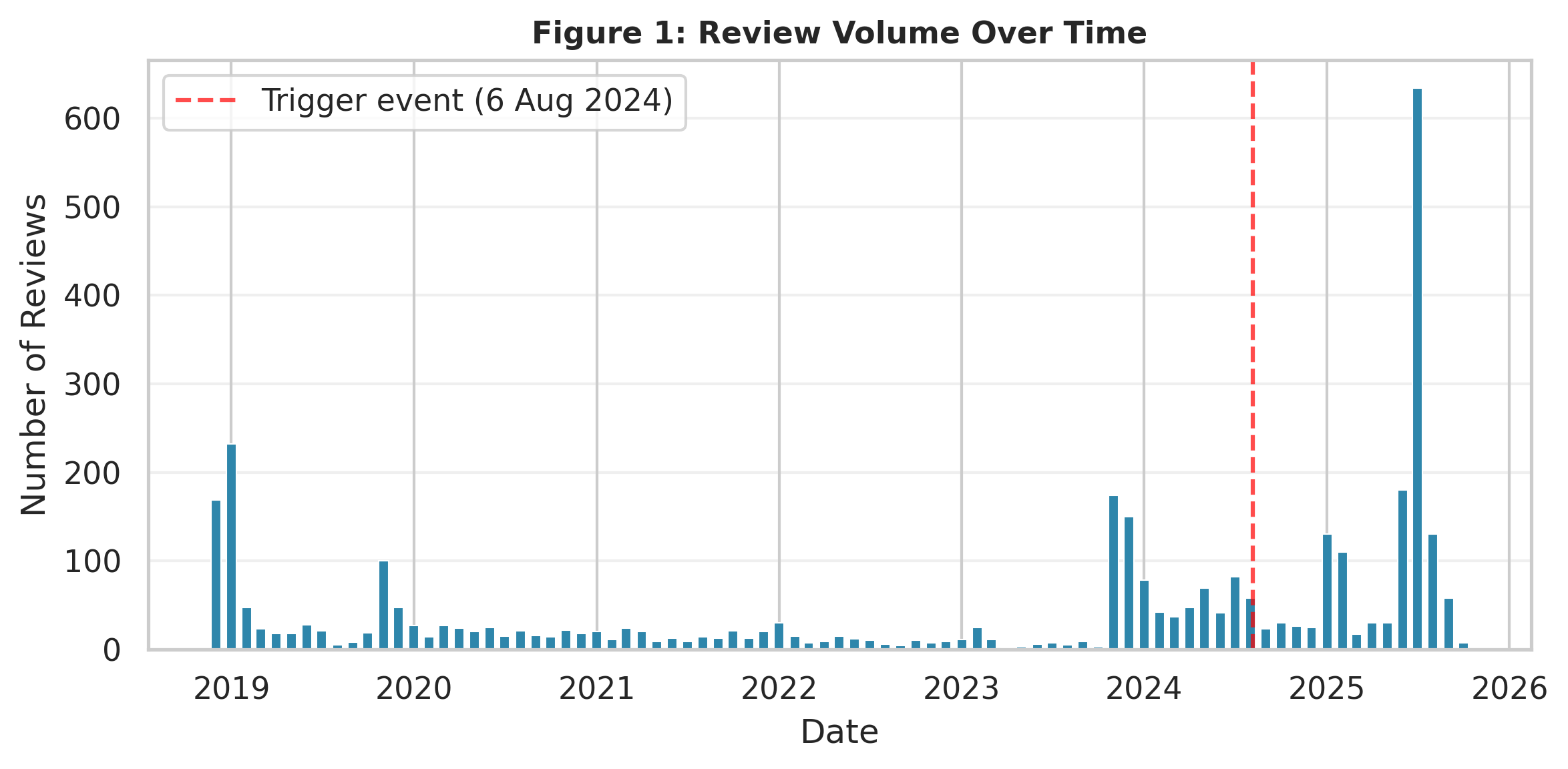
Before the controversy, 84.1% of reviews were positive. Players loved the game. They wrote short, enthusiastic posts - "BRO THIS GAME JUST HITS DIFFERENT" - but barely mentioned any actual gameplay.
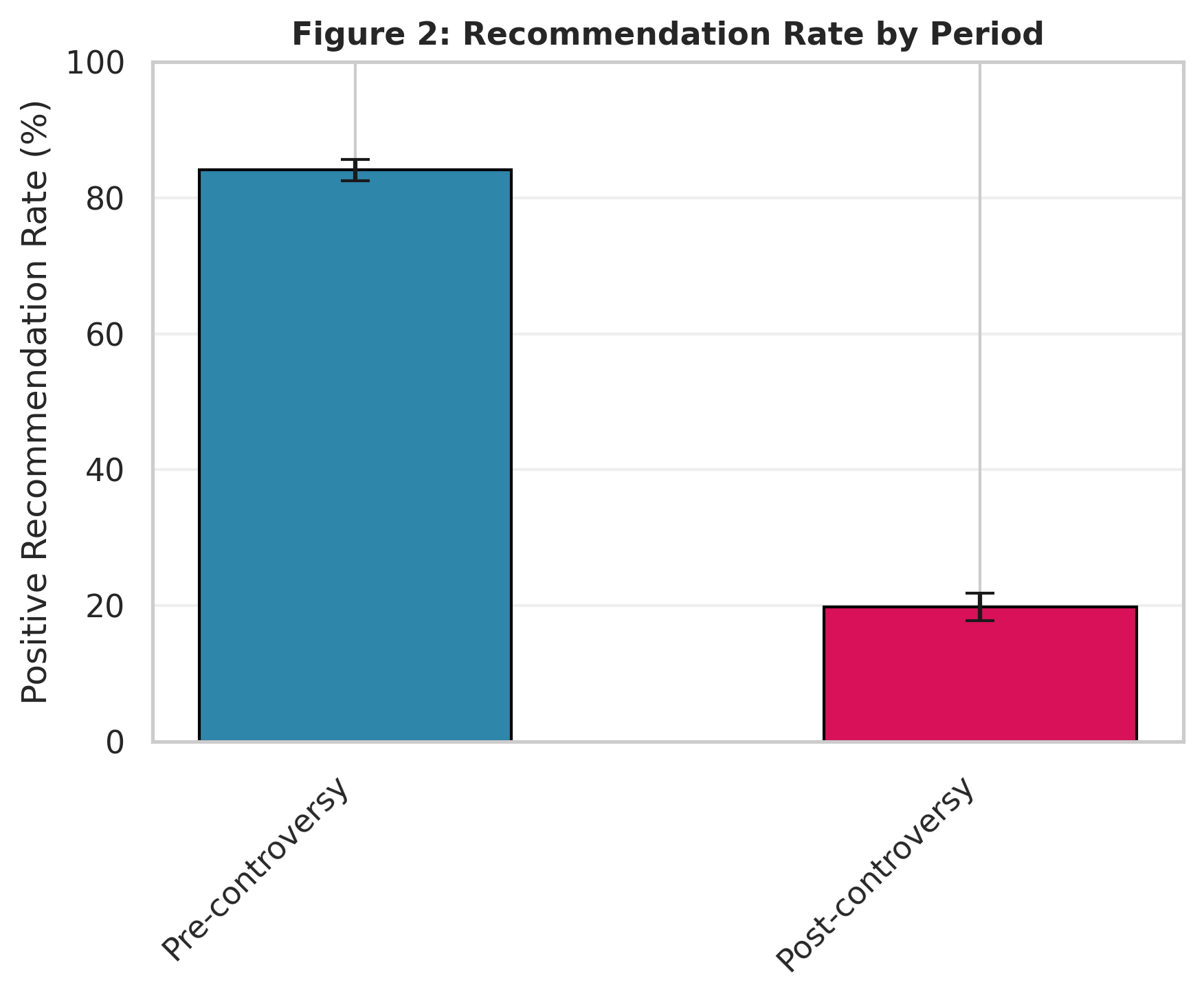
After August 2024, the positive rate collapsed to 19.8%. Not a single month recovered to pre-controversy levels. More than a year later, the reviews are still overwhelmingly negative.
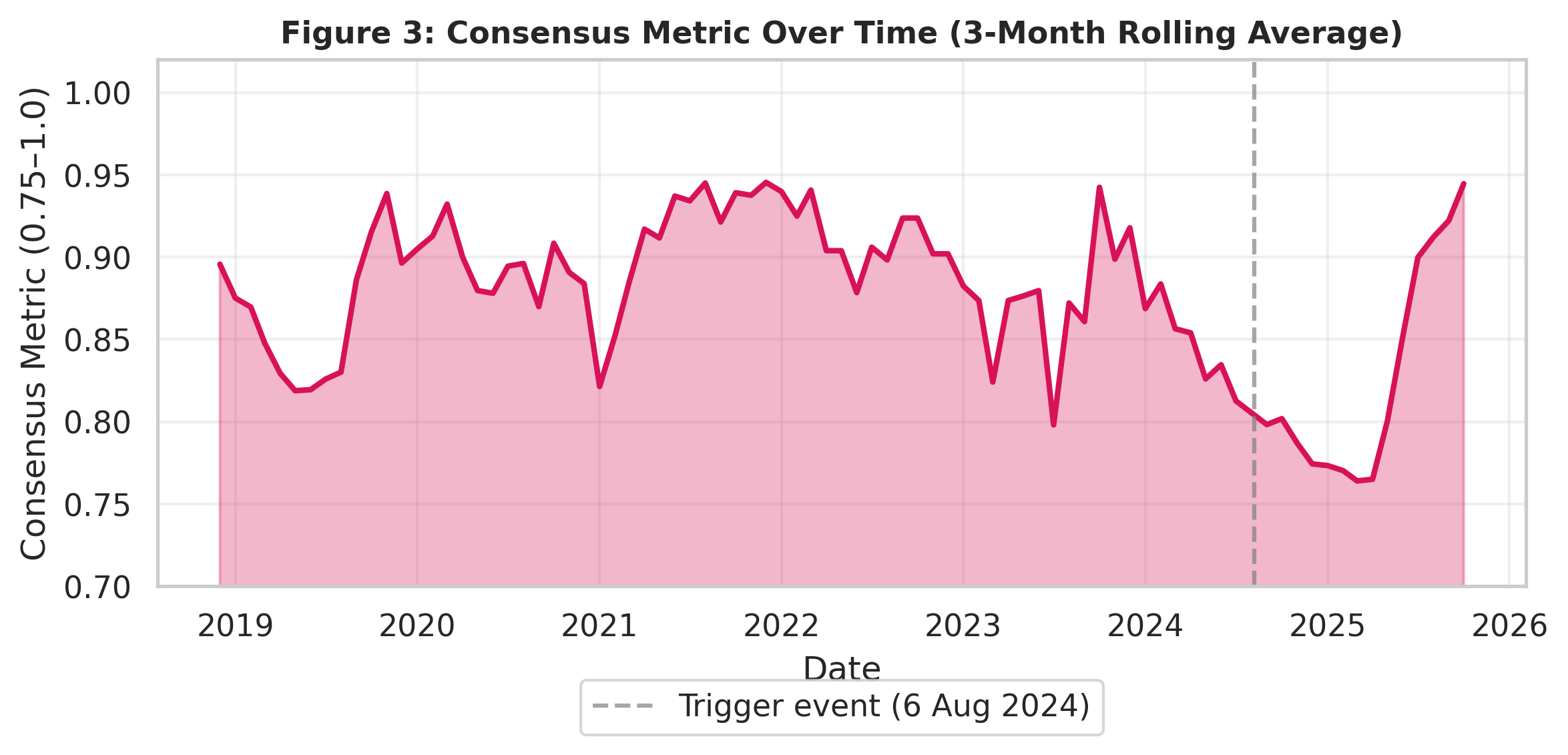
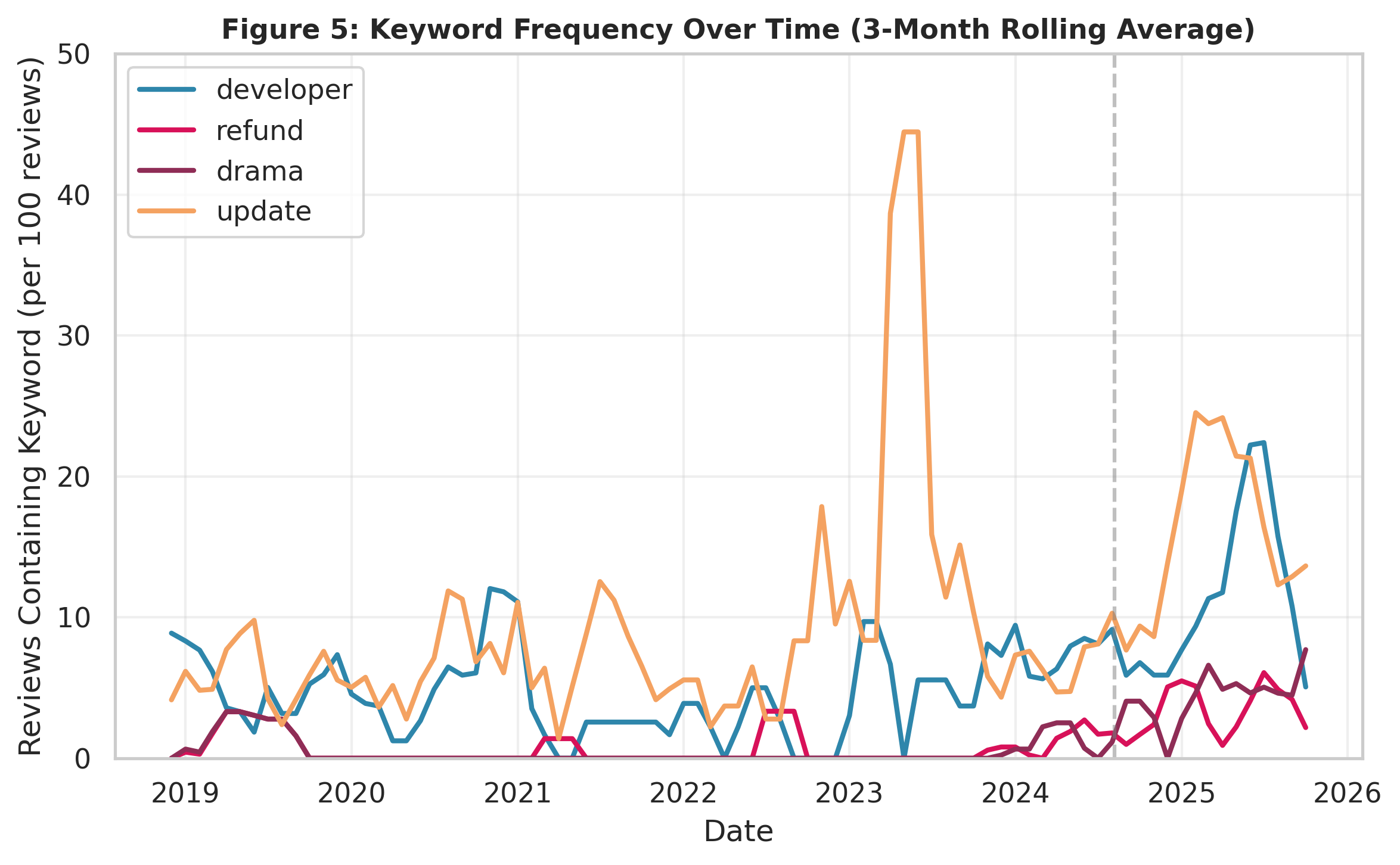
Developer mentions more than doubled. "Refund" went from almost zero to a common keyword. The word "drama" spiked precisely when the controversy started and then disappeared - players knew exactly what was happening.
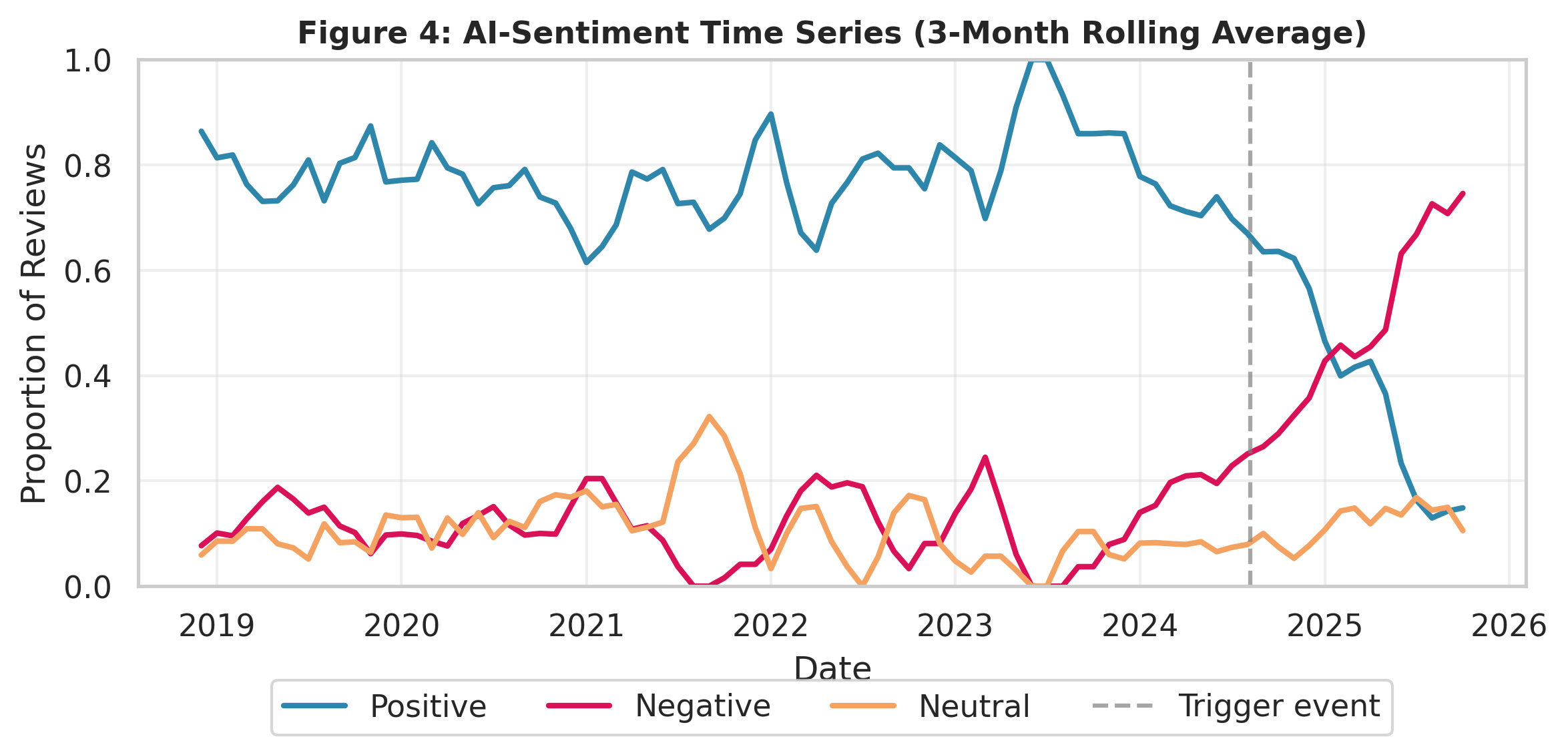
AI sentiment analysis confirmed the scale of the shift: pre-controversy, 13.4% of reviews were classified as negative. Post-controversy, that number hit 64.2%.
What Players Actually Wrote
The numbers only tell you what changed. The reviews themselves tell you how.
I read 150 reviews across both periods and coded them thematically. Five patterns emerged.
Before the controversy, reviews were warm, vague, and deeply personal. Players wrote about how the game made them feel, not what it asked them to do. Combat mechanics? Barely mentioned. Story structure? Not discussed. The game's limited content and slow development - issues that existed from day one - were simply invisible. One reviewer called the developer "amazing." Another said the game was "a labor of love." This was parasocial attachment: players weren't just reviewing a game; they were supporting a person.
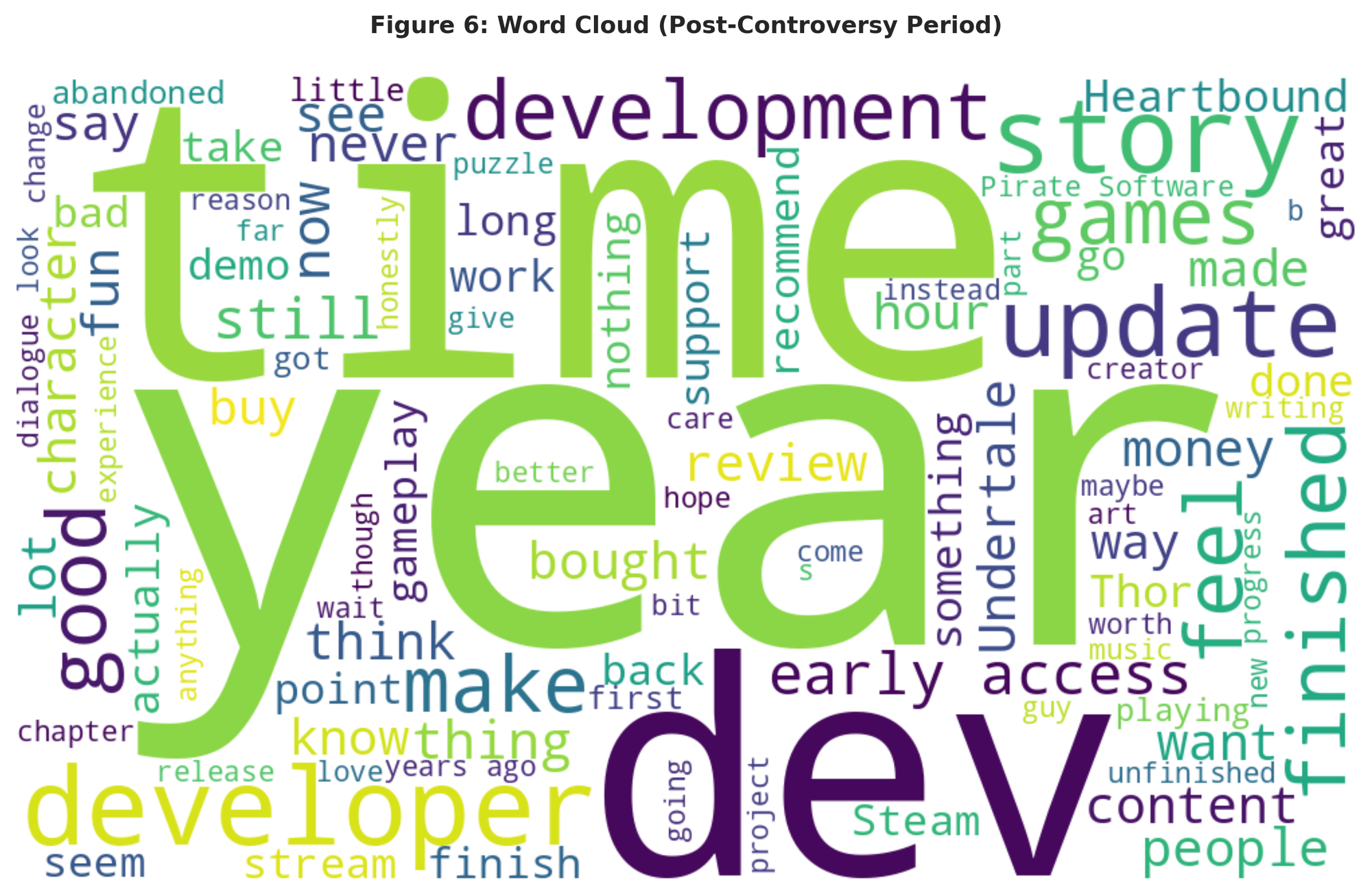
After the controversy, that flipped. The developer became "a complete grifter," "a massive narcissist," "a horrible person." The language shifted from community support to moral accusation. Reviews that started with "I used to love this game" became the norm. The review was no longer about the game - it was a testimony about the developer's character.
The Pattern No One Talks About: Retrospective Critique
The most interesting finding came from comparing the two periods. After the controversy, players started criticizing things that had been true for years. "The game has one available fight which occurs twice. That's it." "I have 2.2 hours in this game from playing the early access content to completion after nearly 8 years of development."
These issues were present before the controversy too. But pre-controversy reviewers didn't mention them. The controversy didn't just add negative sentiment - it reorganized the very criteria by which players judged the game. Once trust in the developer was broken, previously tolerable flaws became deal-breakers.
I called this retrospective critique: the controversy created a new interpretive lens that made old problems newly visible.
After the controversy, the mood settled into something worse than anger: disillusionment. "I'm just tired of empty promises and waiting." One reviewer measured development time against their life milestones: "I bought this game in early 2019. Since then I got COVID, graduated High School, graduated College, got a Full Time Job, got an Apartment, got a Girlfriend, proposed to Girlfriend, trained for a Marathon, completed a Marathon. I have done ALL of this during 'Early Access.'"
The review page no longer functions as a guide to game quality. It has become a permanent record of collective moral judgment.
What This Means for Early Access Games
The Heartbound case reveals a structural vulnerability in early access development. When a game is sold unfinished, the developer's character becomes part of what players are buying. The parasocial bonds that sustain enthusiasm in normal times become vectors for a different kind of damage when trust breaks.
Is this review bombing? Not quite - and the distinction matters. Unlike the campaigns we've seen around major franchise releases such as The Last of Us Part II, which triggered organized counter-bombing from defenders, this controversy produced no pushback at all. Personal controversies in small indie communities follow a different logic. There are no political camps to mobilize. Just a community that believed in someone, felt betrayed, and hasn't stopped talking about it.
The review page does not return to normal. Within the 14-month window of this study, once the criteria of judgment shifted, they did not shift back.
This post is based on research submitted to Games & Culture. A preprint with full methodology, data analysis, and all figures is available on Zenodo: https://doi.org/10.5281/zenodo.20457597.
If you have ever gone back and changed a review after your opinion of a developer shifted, I would be curious whether the pattern described here matches your own experience.


